Celebrating Okuizome in Singapore:
A Japanese 100-Day Ceremony
/シンガポールで迎えたお食い初め
What is Okuizome?
Earlier this year, we welcomed our first child here in Singapore.
The months since have been a blur of feeding, nappies, laundry, naps, and discovering just how quickly time can move when measured in three-hour cycles. We considered confinement nannies and confinement hotels, but eventually my mother came from Japan and stayed with us for about a month, which was a tremendous help—especially as everything coincided with Chinese New Year.
And somehow, before I quite realised it, one hundred days had passed.
Had we been living in Japan, there might have been shrine visits, family gatherings, and all the small traditions that naturally surround the arrival of a baby. Living overseas, however, these milestones feel more dependent on us.
So when the 100-day mark approached, I decided I wanted to celebrate Okuizome.
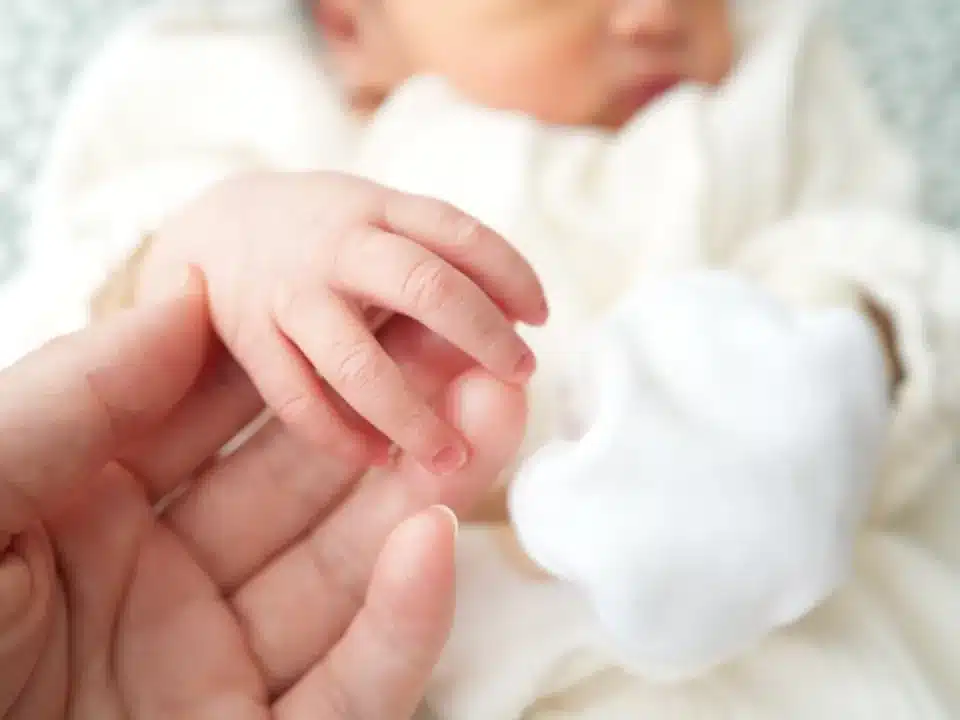
For anyone unfamiliar with the custom, Okuizome is a Japanese ceremony held when a baby reaches around 100 days of age. A special meal is prepared and the baby is symbolically “fed”, with wishes for a lifetime of good health, happiness, and plentiful food.
Of course, babies this age still live entirely on milk.
The meal is really for the family.
And perhaps for the future.
The Meaning Behind the Meal
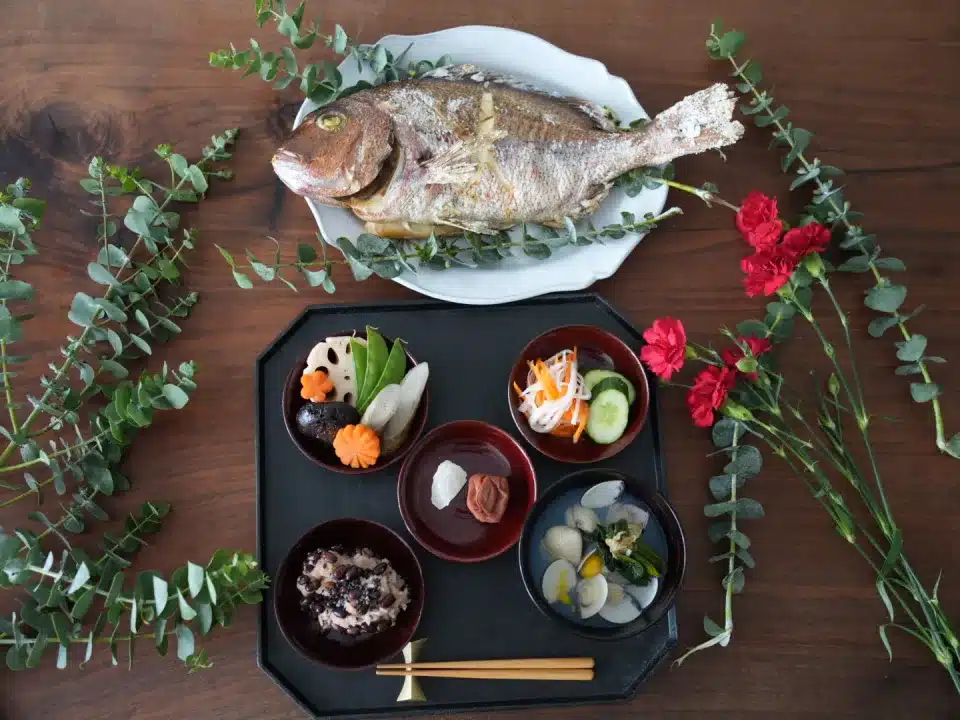
One of my favourite discoveries while preparing Okuizome was learning that every item on the menu carries a symbolic meaning.
Japanese celebratory food often works this way. Much like New Year’s osechi cuisine, each dish contains layers of history, wishes, and cultural memory.
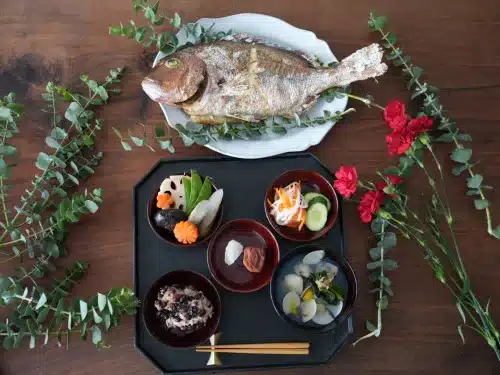
Sea Bream (Tai)
A symbol of celebration and good fortune.
The Japanese word medetai (auspicious) contains the sound tai, making sea bream the classic fish for special occasions.
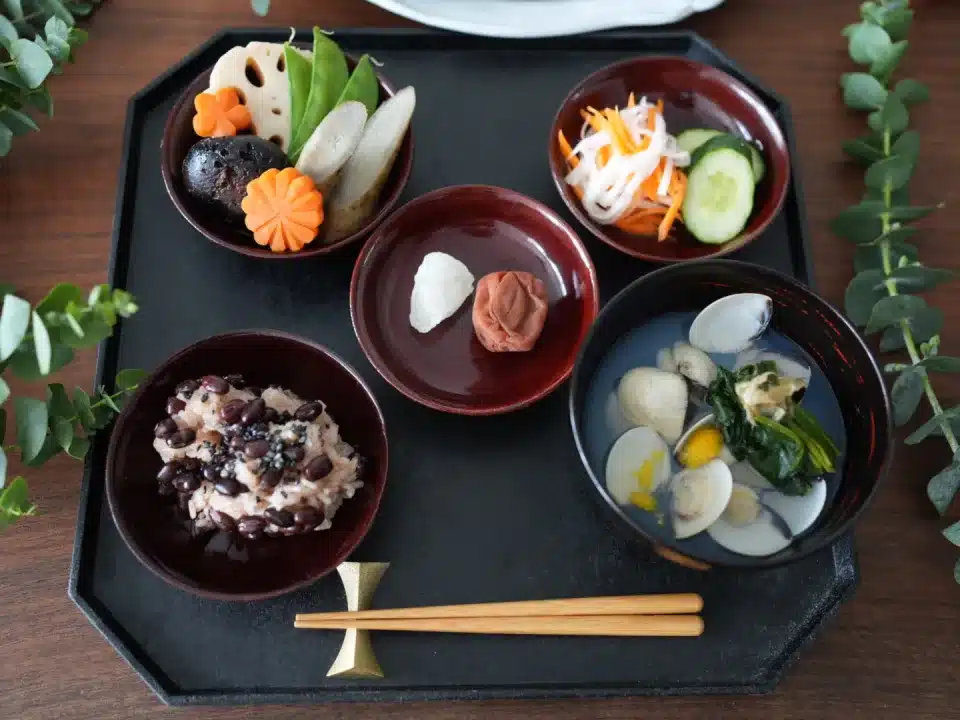
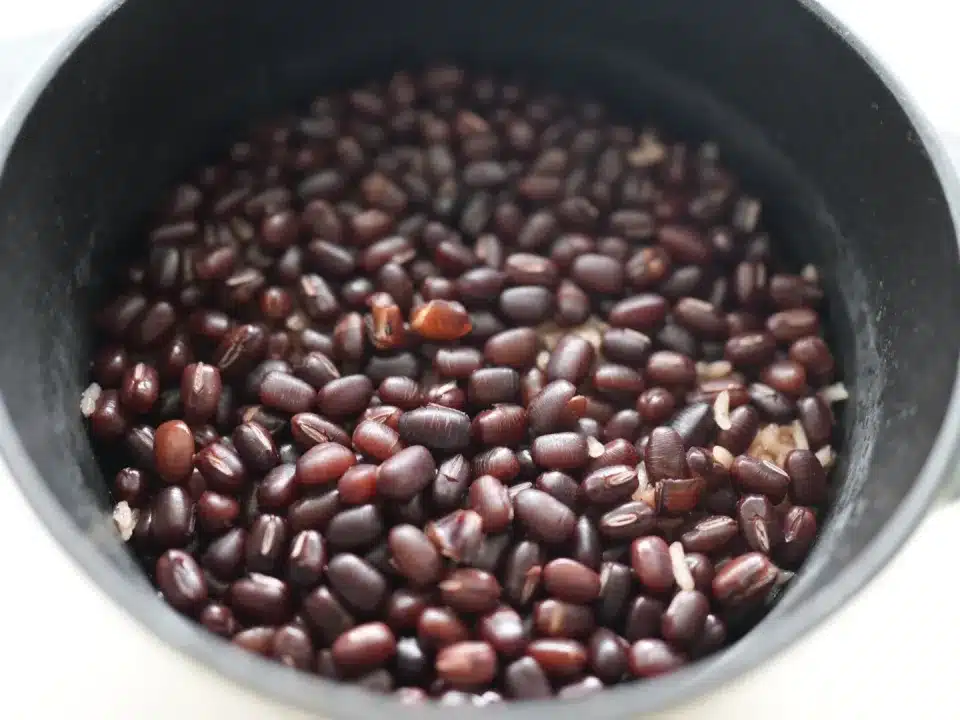
Sekihan (Red Bean Rice)
Made with glutinous rice and adzuki beans.
Its red colour is traditionally believed to ward off evil spirits and bring good fortune.
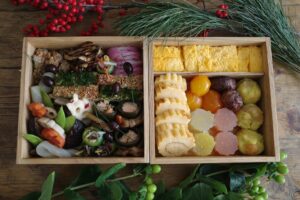
Simmered Root Vegetables
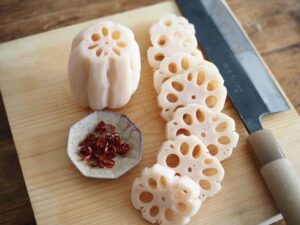
Daikon, carrot, lotus root, and burdock are commonly used.
As vegetables that grow firmly in the earth, they symbolize a stable and grounded life.
Clam Soup
Because the two shells fit together perfectly, clams symbolize finding a good life partner in the future.
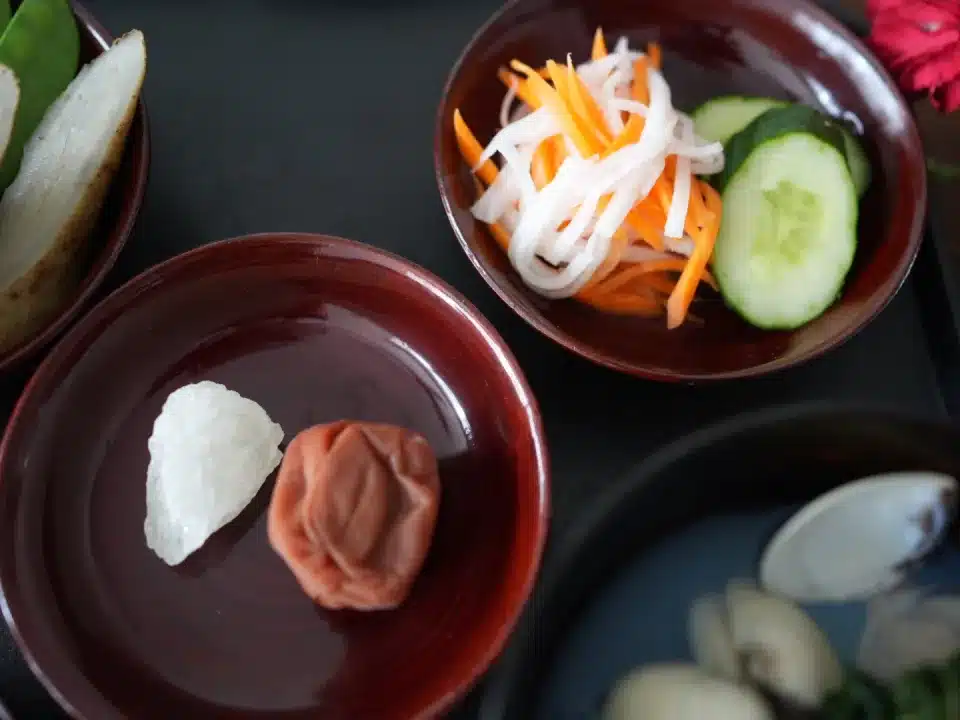
Tooth-Strengthening Stone
A stone used to pray for strong, healthy teeth.
Learning the meaning behind each item made me appreciate how much thought previous generations put into these traditions.
Food becomes a language of wishes.
Finding Sea Bream in Singapore
The closer the day came, the more invested I became in finding a proper sea bream.
At first I thought, “Any fish with a head will do.”
Then gradually, “No… it has to be tai.”
By the week before, I had somehow convinced myself that if I couldn’t find a whole sea bream, perhaps I shouldn’t do Okuizome at all.
Thankfully, Great World Mall came to the rescue.
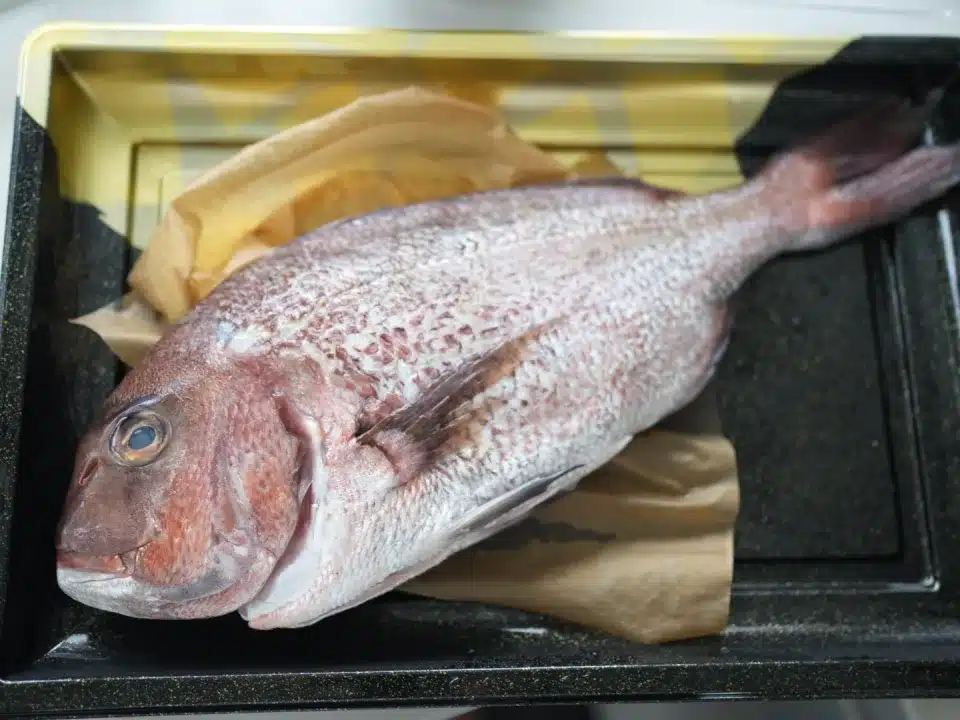
I found a beautiful Japanese sea bream at Kuriya, the sushi shop located on B1 of Great World Mall, one of the Japanese expat staples in Singapore.
I haven’t consistently seen whole sea bream at other branches, but the Great World location often displays them in ice-filled cases over the weekend.
When I visited on a Saturday morning, there was a beautiful Japanese sea bream available for around SGD 100. They kindly cleaned and scaled the fish on the spot.
Before that, I had also checked the fish section at Cold Storage in the same mall. There were other whole fish available—including something resembling kinmedai—but the size and appearance weren’t quite what I had imagined for Okuizome.
Quick Recipe – Oven-Baked Sea Bream
Ingredients
- 1 whole sea bream, cleaned and scaled
- Salt
Method
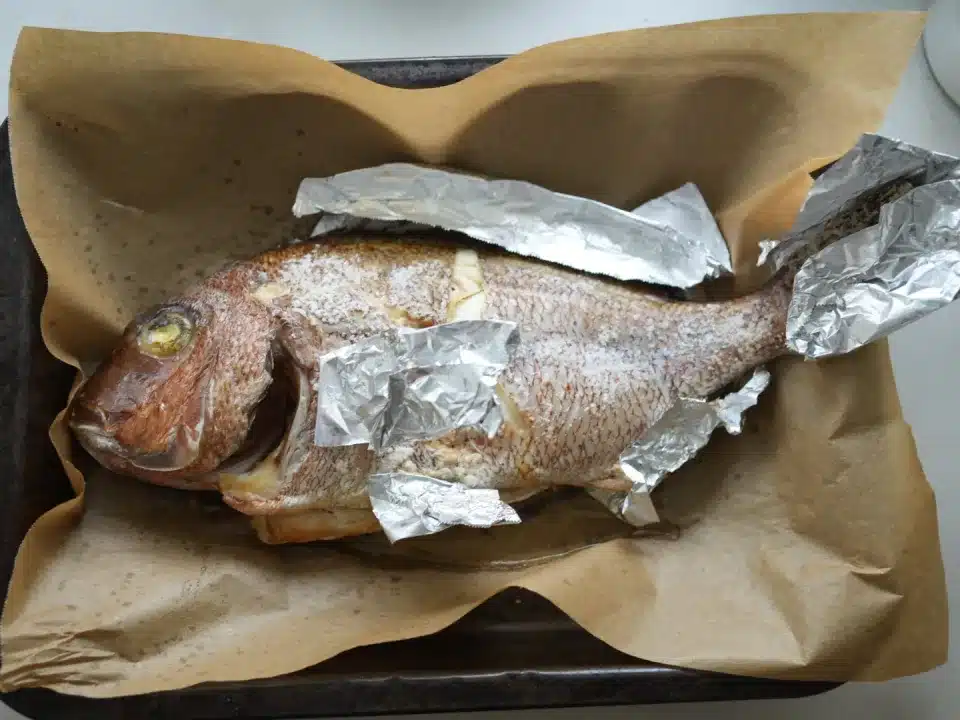
- Wash and thoroughly pat the fish dry.
- Place it with the head facing right.
- Score a small cross on the skin to prevent bursting.
- Salt generously.
- Apply decorative salt to the fins and tail.
- Protect delicate areas with aluminium foil.
- Prop the tail upward slightly for a more festive presentation.
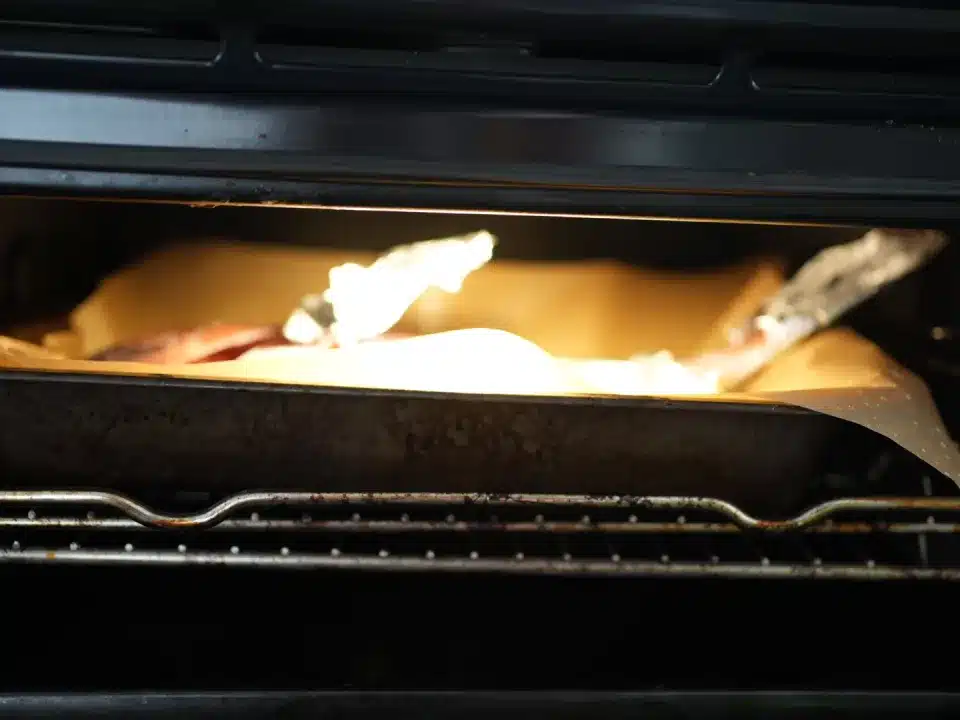
- Bake at 200°C for approximately 40–50 minutes.
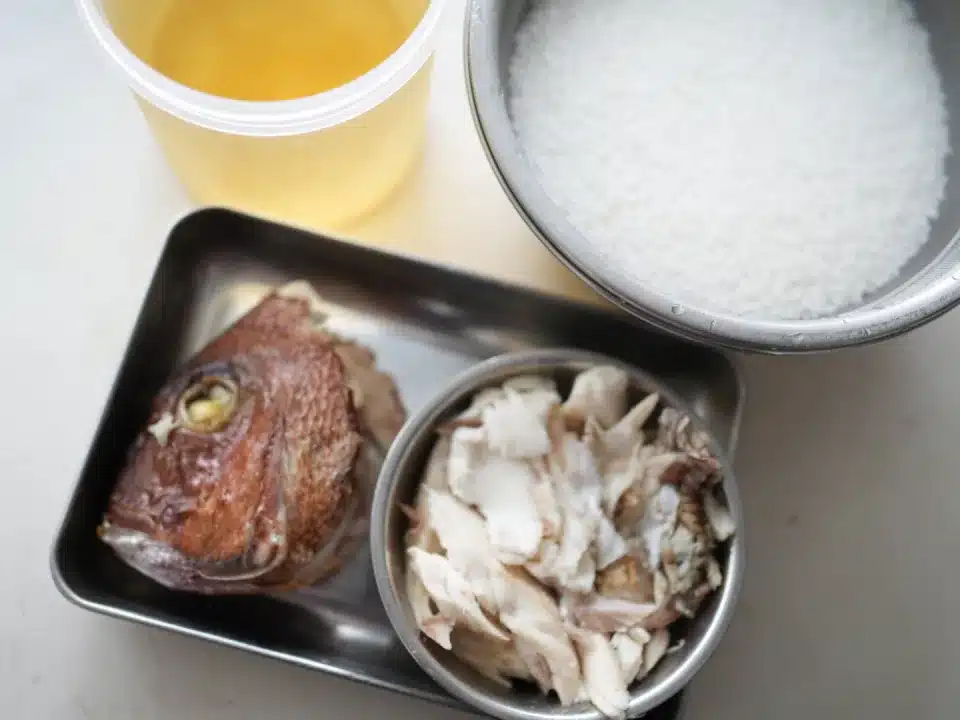
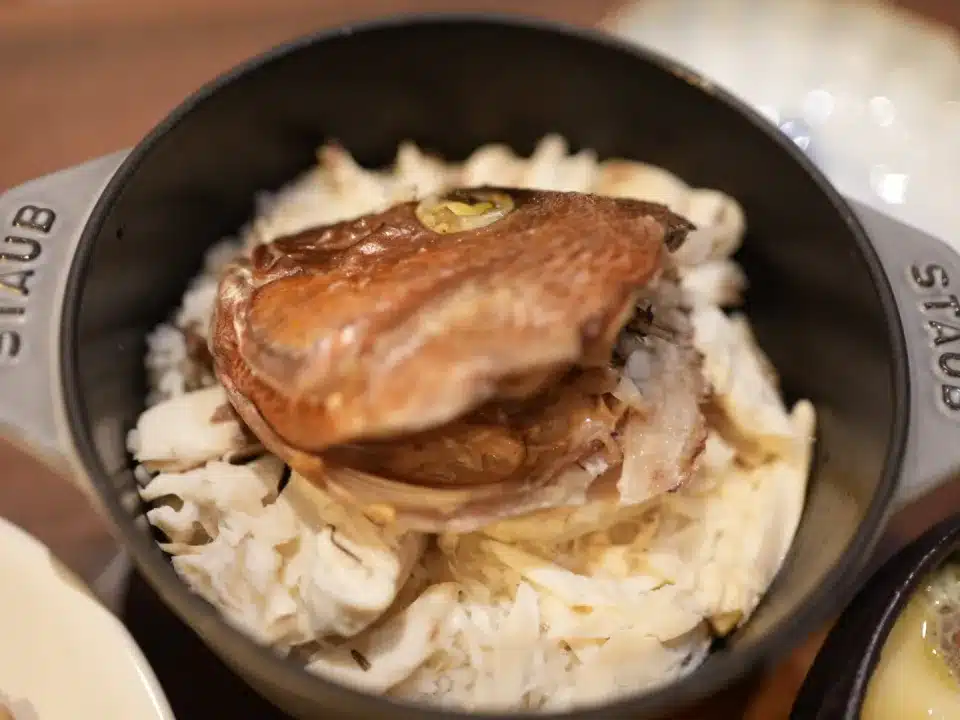
The next day, we used the remaining meat, head and bones to make tai-meshi.
The tai-meshi may have been the culinary highlight of the entire event.
Sekihan: Red Bean Rice in a STAUB Pot
This was my first time making sekihan.
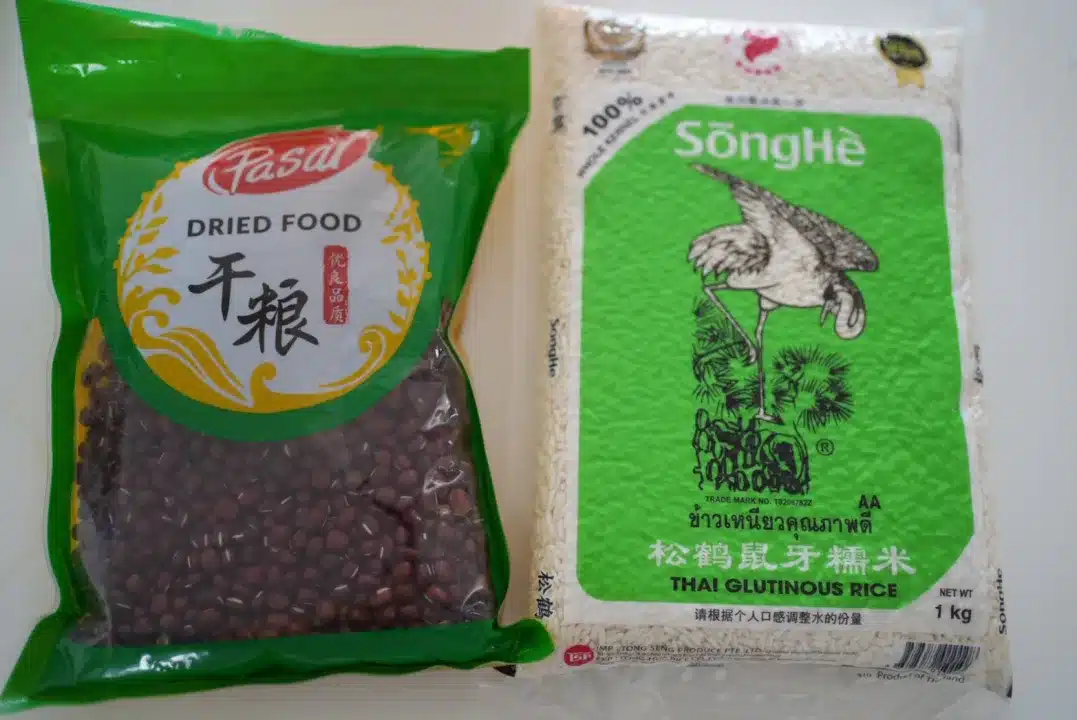
I used Thai glutinous rice and Chinese adzuki beans purchased from NTUC FairPrice.
Originally I imagined steaming it the traditional way.
Reality, however, involved a baby, so everything went into a STAUB pot.
The result was surprisingly delicious.In fact, we’ve made sekihan several times since. One unexpected side effect of Okuizome.
Quick recipe – Sekihan
Ingredients
- 100g adzuki beans
- 600ml water
- 1 tbsp sugar
- 1/3 tsp salt
- 1.5 cups glutinous rice
- 1 tbsp sake
Method
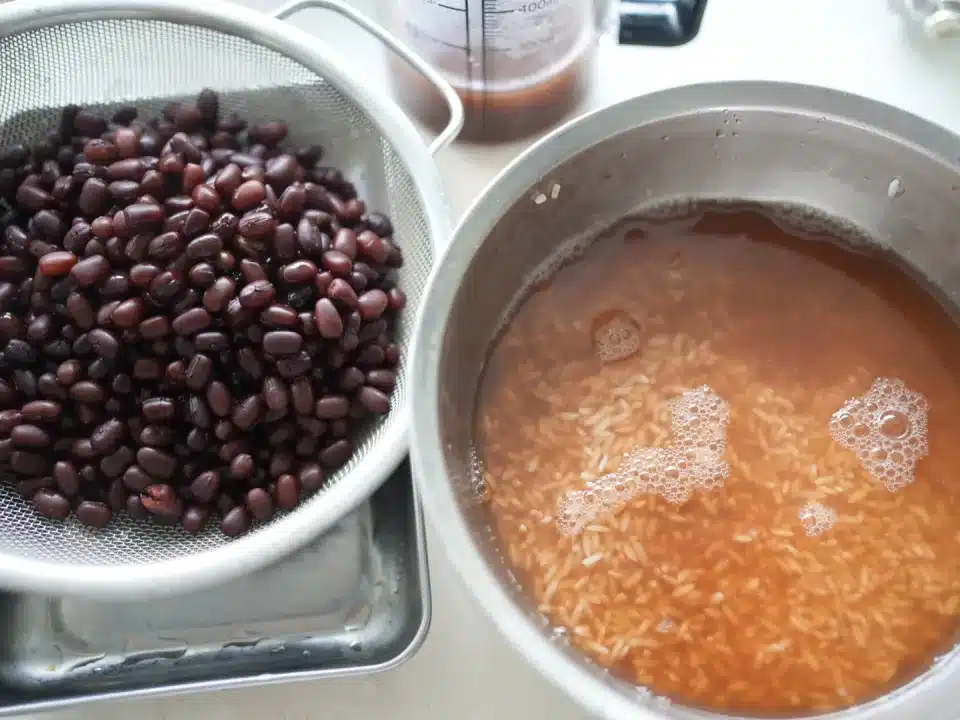
- Boil the beans once and discard the water.
- Simmer in 600ml fresh water for about 30 minutes.
- Add sugar and salt.
- Separate beans and cooking liquid.
- Soak glutinous rice in 270ml of the cooking liquid for 1–2 hours.
- Combine rice, beans and sake in a STAUB pot.
- Bring to a boil.
- Cover and cook over low heat for 12 minutes.
- Rest for 10 minutes.
- Fluff gently before serving.
The beans may not stay perfectly intact, but the rice becomes wonderfully chewy and aromatic.
Root Vegetables, Pickles & Clam Soup
The remaining dishes were much easier.
Lotus root and carrots came from NTUC FairPrice.
Burdock root and daikon came from Don Don Donki.
For pickles, I made:
- Kohaku namasu (daikon and carrot salad)
- Lightly pickled cucumber
Simple, but festive.
For clam soup, I found vacuum-packed clams in the frozen section of Don Don Donki for around SGD 6.
Although the package claimed they were ready to cook, I gave them a quick rinse anyway.
The broth turned out beautifully.
I couldn’t find mitsuba, so I floated a few strips of lemon peel instead.
The Tooth-Strengthening Stone
This was perhaps the most difficult item.
Traditionally, families obtain a special stone from a shrine. Living in Singapore, I had neither a shrine nor a stone.
So I improvised with a pickled plum (with its stone pit) & some crystal sugar.
Close enough.
Reflections on Celebrating Japanese Traditions Overseas
The older I get, the more I appreciate how Japanese food often serves as a language of wishes.
In Okuizome, a sea bream becomes more than a fish.Red bean rice becomes more than rice.
Even a small stone carries a prayer.
Living in Singapore, I cannot easily visit the shrines my grandparents visited, nor recreate every tradition exactly as it might have been done in Japan.
Yet perhaps traditions survive precisely because they adapt.
The fish came from a shopping mall. The rice was Thai. The adzuki beans were Chinese. The celebration happened closer to 120 days than 100. The guest of honour cried through most of it.
And still, it felt right.
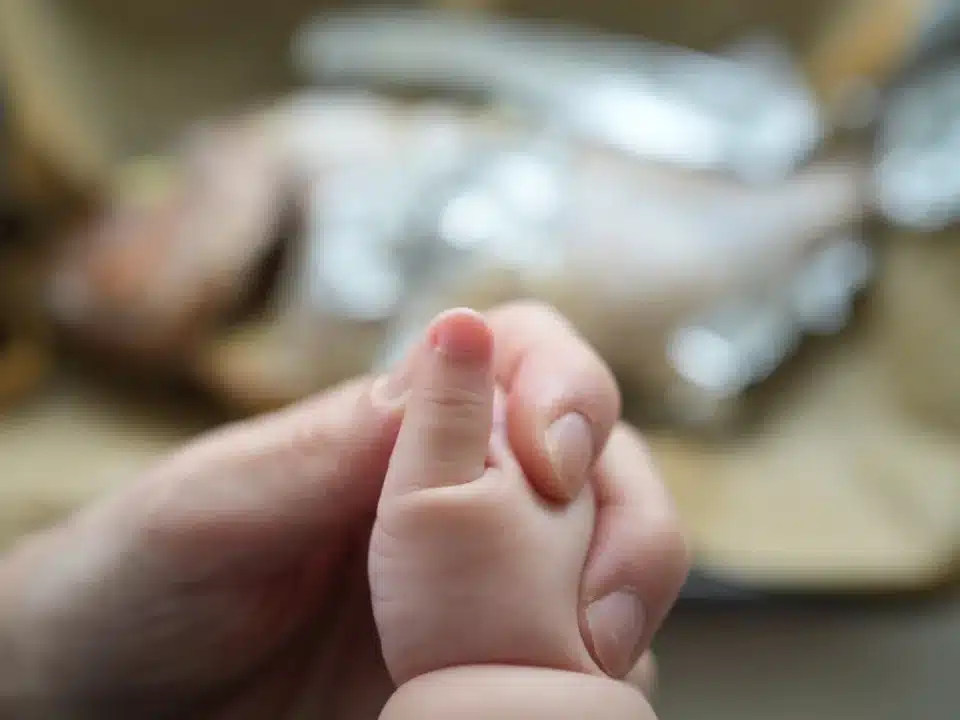
シンガポールで迎えたお食い初め
久しぶりの投稿となります。
今年2月、シンガポールで第一子を出産しました。
産後は産褥ナニーや産後ケアホテルなども検討したものの、ちょうどチャイニーズニューイヤーの時期とも重なったため、日本から母に来てもらい約1か月サポートしてもらいました。新生児期は想像以上に慌ただしく、日本との違いに戸惑うこともたくさん。
それでも無事すくすく成長し、生後100日を迎えたのでシンガポールでお食い初めをしました。
実際には120日近くになってしまったのですが、そこは海外生活らしくおおらかに。ラッキーなことに日本産の尾頭付きの鯛をゲットできたので、シンガポールでお食い初め。
歯固め石は持ち合わせていなかったので、氷砂糖と梅干で。
お赤飯を炊くのは初めてで、最初は蒸し器で。。。と思っていたのですが、いろいろと計画倒れになり、タイのもち米とでストウブで炊くことに。
これがとっても簡単&おいしくて、その後お赤飯ブームが続いています
お食い初めも、順番を読みながら儀式を始めたところ、すぐに限界がやってきて大泣き、正式には程遠く😇
残りの鯛は翌日、あらでお出汁を取って鯛ご飯に
それにしても、よく飲み、泣き、笑い、眠り、一生懸命生きてくれるその姿に毎日へとへとになりながらも夢中です
This post has a Video: Watch on Instagram✨(インスタに動画掲載しています)
A short Instagram video is available below, showing the overall flow and highlights of the recipe.
インスタで、動画を交えて全体の流れやポイントをご紹介しています。



Comments