Julius Roberts Epic Tarragon Roast Chicken, Luxury of Autumn Cooking
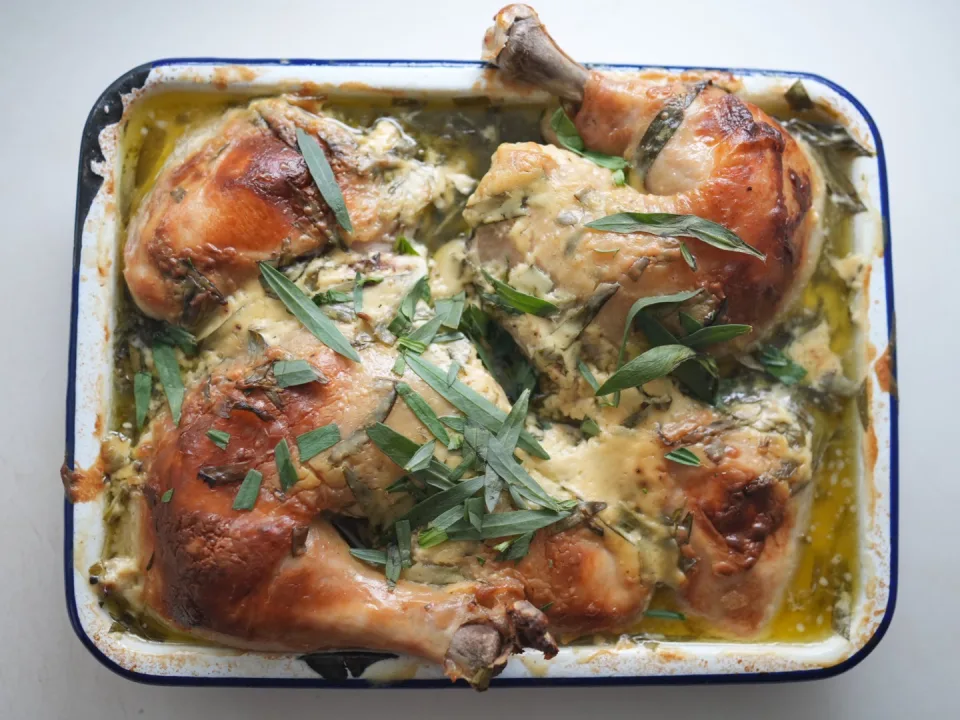
How Epic this recipe is!
The word “epic” is used lightly these days, especially around food, but oh so true. This roast chicken genuinely earned the name.
“Epic Tarragon Roast Chicken” from The Farm Table did not feel epic because it was complicated or extravagant. It felt epic because of how quietly confident, satisfying, perfect and delicious it was. Chicken, a handful of familiar techniques, and tarragon- one herb I had never cooked with before. The result was not showy. It was deeply satisfying in a way that lingers.
Tarragon had always been one of those herbs I recognized visually but never truly understood. I had seen it paired with chicken countless times in other people’s kitchens and cookbooks. It appeared often enough to spark curiosity, but never enough to push me into action. This recipe finally tipped the balance.
Recipe Reference
“Epic Tarragon Roast Chicken” – THE FARM TABLE (@juliusroberts), – page 275
Meeting Tarragon for the First Time
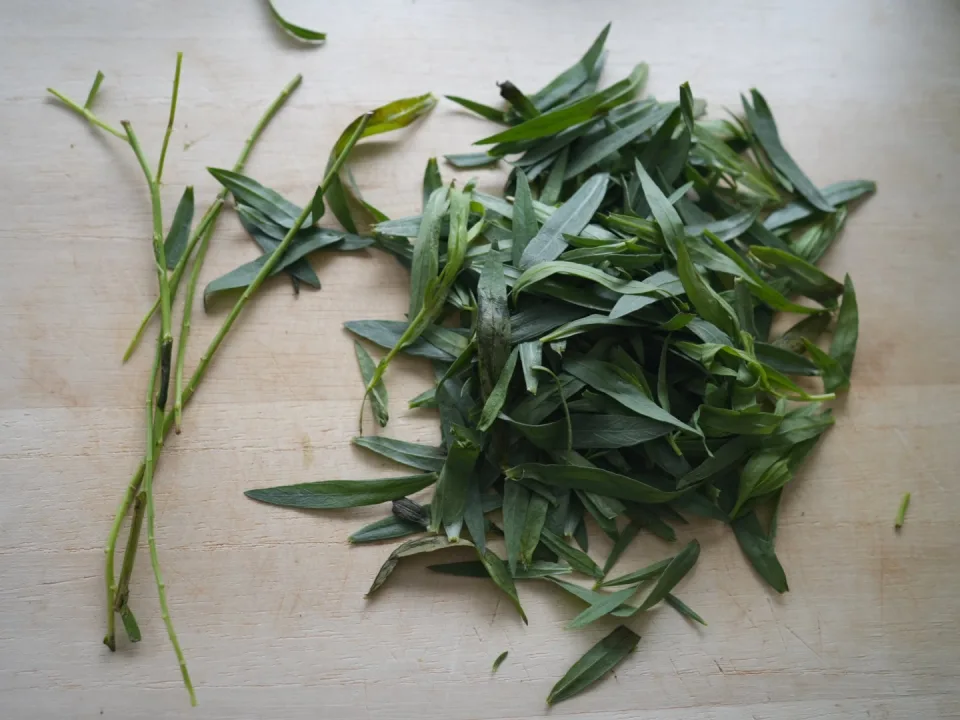
Cooking with a new herb feels a bit like meeting someone you have heard a lot about but never spoken to directly. You know their reputation, perhaps a few defining traits, but not how they behave in real life.
Tarragon surprised me immediately. Soft, aromatic, gently anise-like, but not sharp. There is a sweetness to it that feels rounded rather than assertive. In this recipe, that quality becomes essential. Once paired with mustard, cream, and white wine, the herb does not dominate. Instead, it melts into the sauce, creating something cohesive and calm.
This was one of those moments where I felt I was being taught something quietly. Not through instruction, but through balance. The recipe showed how an herb can guide a dish rather than announce itself.
A Recipe Rooted in Autumn
The chapter placement matters. This recipe sits in the Autumn section of the book, and it makes perfect sense.
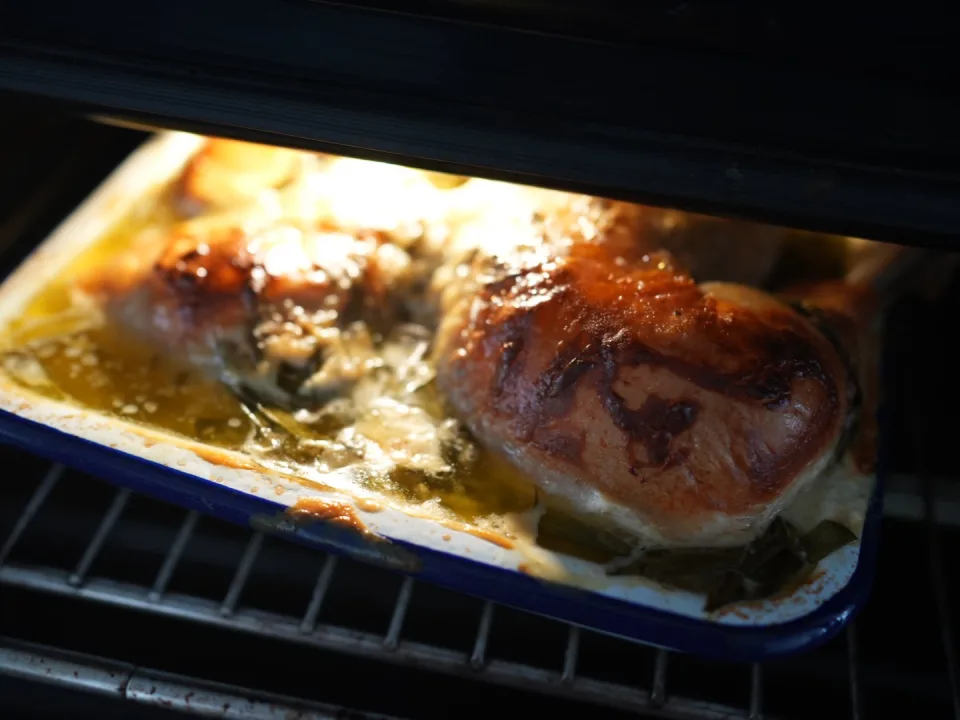
Everything about it feels seasonal. The golden skin of the chicken. The cream bubbling gently around it. Garlic tucked underneath, doing its slow, invisible work. The oven becomes not just a cooking tool but a source of warmth, both literal and emotional.
Autumn cooking, for me, is about reassurance. Food that asks you to slow down just enough. This roast does exactly that. It invites patience without demanding precision. The timings are generous, forgiving. The reward is a kitchen filled with warmth and scent, and a dish that feels both homely and refined.
The Method That Builds Confidence
One of the things I appreciated most was how approachable the method felt.
The chicken is roasted first at a high temperature, just long enough to begin rendering the skin and setting the stage. Twenty to thirty minutes, nothing dramatic. Then comes the transformation.
The tarragon, mustard, cream, and white wine are poured all over the bird. At this point, the recipe encourages you to work the mixture into all the nooks and crannies. It is such a tactile, reassuring instruction. You feel involved, not intimidated.
The oven temperature drops. The chicken returns for another thirty to forty minutes. What happens during that time feels almost alchemical. The stock begins bubbling. The sauce thickens slightly. Aromas soften and deepen. The bird becomes tender without losing structure.
By the time it comes out, everything is unified. The sauce is not separate from the chicken. It belongs to it.
That Sauce You Want to Save Forever
There are sauces that politely accompany a dish, and then there are sauces that demand your attention. This one falls firmly into the latter category.
The tarragon-mustard-cream mixture becomes something you want to protect. Something you instinctively spoon carefully, making sure none goes to waste. It coats the chicken without overwhelming it, carrying both richness and freshness.
It reminded me how often the best sauces are born not from reduction or complexity, but from timing. Letting ingredients meet at the right moment, under the right conditions, without interference.
Learning to Trust the Oven
This recipe also nudged me into a broader realization. Cooking chicken in the oven is a wonderful adventure.
There is something grounding about placing a whole bird in the oven and trusting the process. Watching, adjusting, waiting. I have cooked chicken in parts far more often than whole, perhaps out of habit or caution. This dish made me want to return to whole birds more often.
There is generosity in a whole chicken. It feeds more than hunger. It creates leftovers, memories, possibilities. I already find myself imagining this method adapted to other seasons, other herbs, other moods.
Ingredient list & Steps in Text
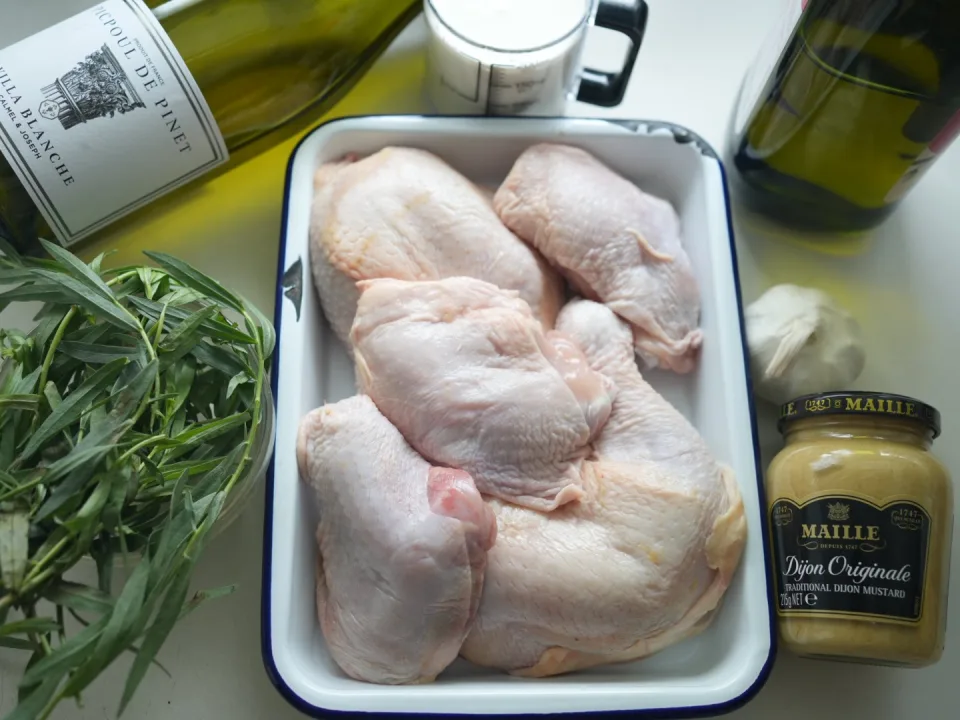
Ingredients – Serves 5
- 1 organic chicken (or, your favorite chicken pieces)
- 3 tbsp olive oil
- 1 whole head of garlic
- 1 cup (250 ml) quality heavy cream
- 1/2 cup (about 20 g) fresh tarragon, stalks removed and roughly chopped
- 1 large heaped tbsp Dijon mustard
- 1 glass of dry white wine
- Salt and pepper
Instructions
- Preheat the oven to 450°F / 240°C.
- Spatchcock the chicken: turn it over and cut along one side of the spine from tail to neck. Turn it back over, open the two sides, and press down firmly to flatten. (A butcher can do this for you.)
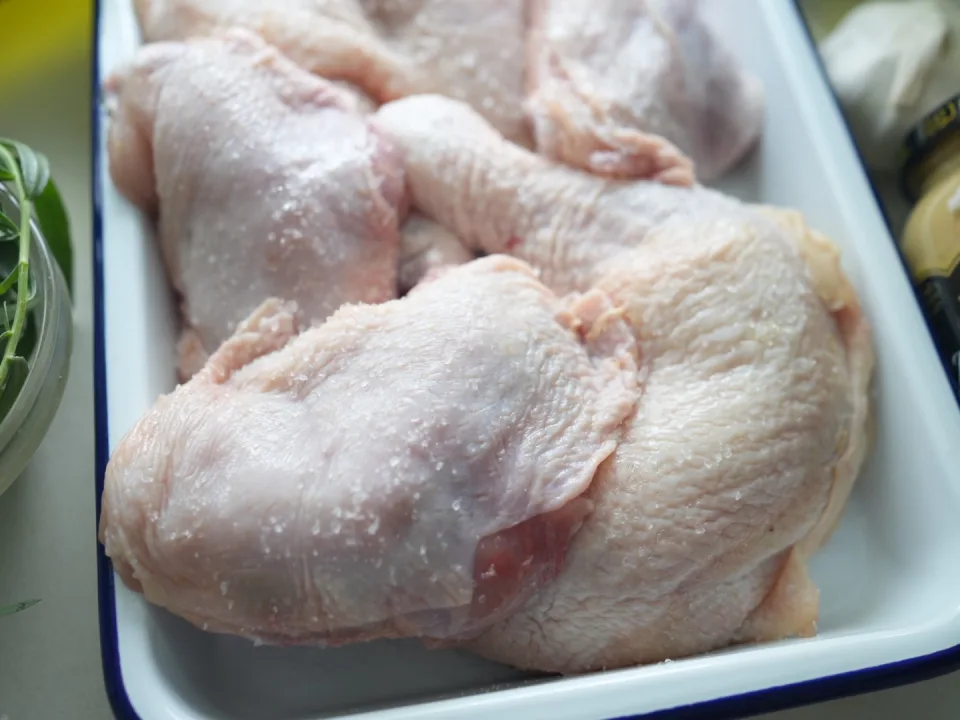
- Place the chicken in a large, high-sided roasting pan. Season generously with salt on both sides. Leave at room temperature for about 1 hour to remove the chill from the fridge.
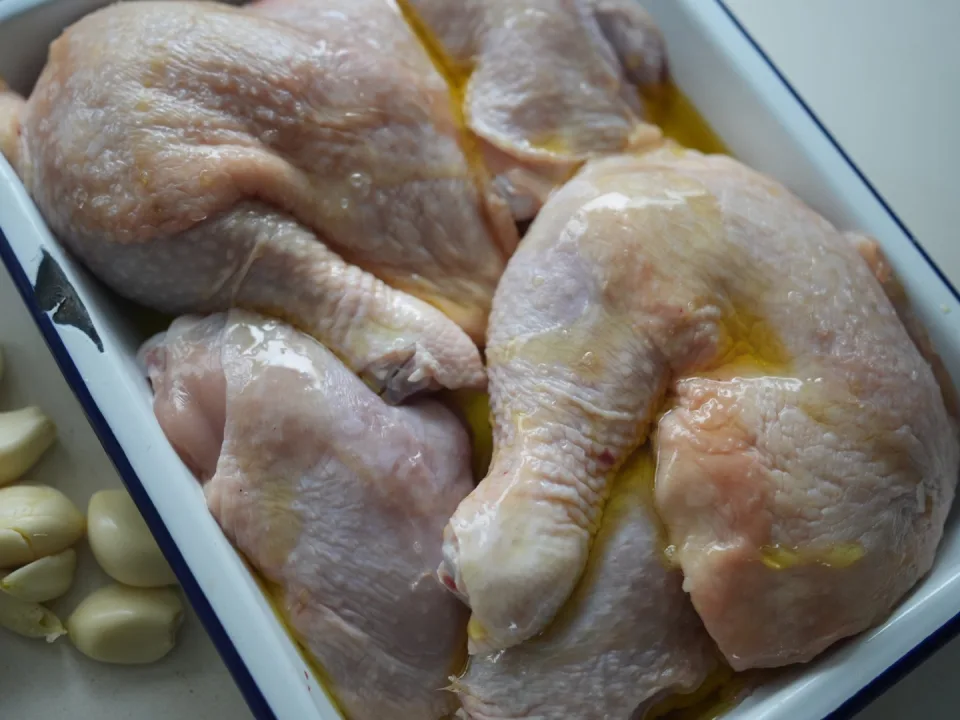
- Drizzle the skin generously with olive oil, working it into all the nooks and crannies.
- Smash the whole head of garlic and tuck the cloves underneath the chicken.
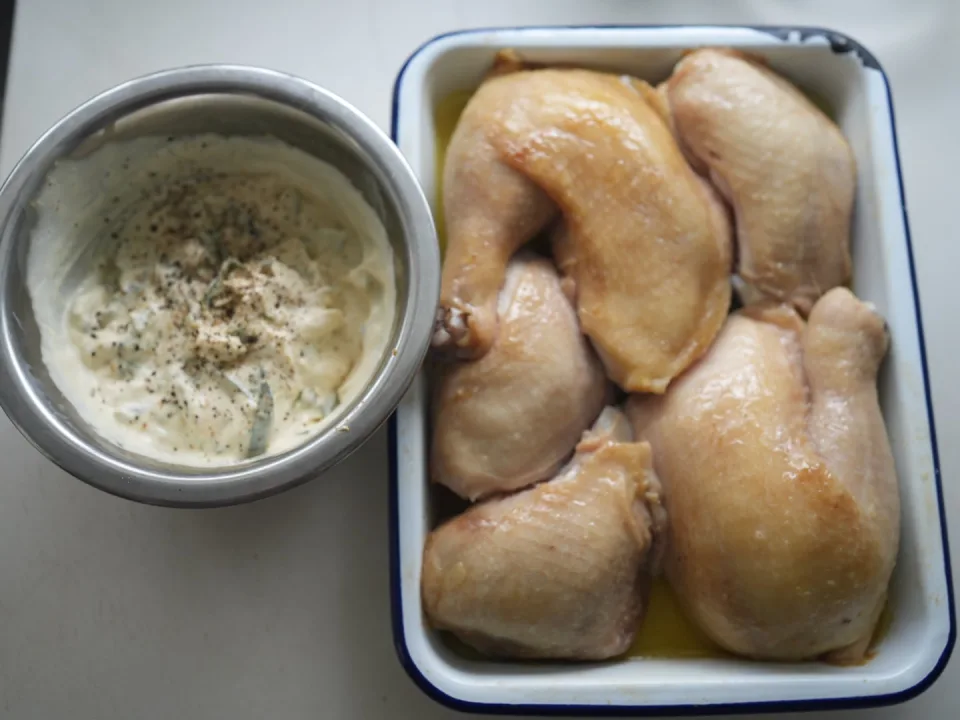
- Roast in the oven for 20 to 30 minutes, until the skin begins to turn golden brown.
- While the chicken is roasting, mix the cream, chopped tarragon, and Dijon mustard in a bowl. Season well with salt and pepper.
- After 20 to 30 minutes, reduce the oven temperature to 325°F / 160°C. Remove the chicken from the oven and pour a generous glass of white wine into the roasting pan.
- Pour the tarragon cream mixture over the chicken and return it to the oven.
- Roast for a further 30 to 40 minutes, until cooked through. Check the deepest part of the thigh with a meat thermometer; it should read 150 to 160°F / 65 to 70°C. If you do not have a thermometer, pierce the thigh with a skewer and ensure the juices run clear.
- Remove the chicken from the oven and rest for 15 minutes, loosely covered with foil.
- Carve directly in the pan and serve with plenty of sauce, garlic, and a zingy green salad.
Quick flow in photo

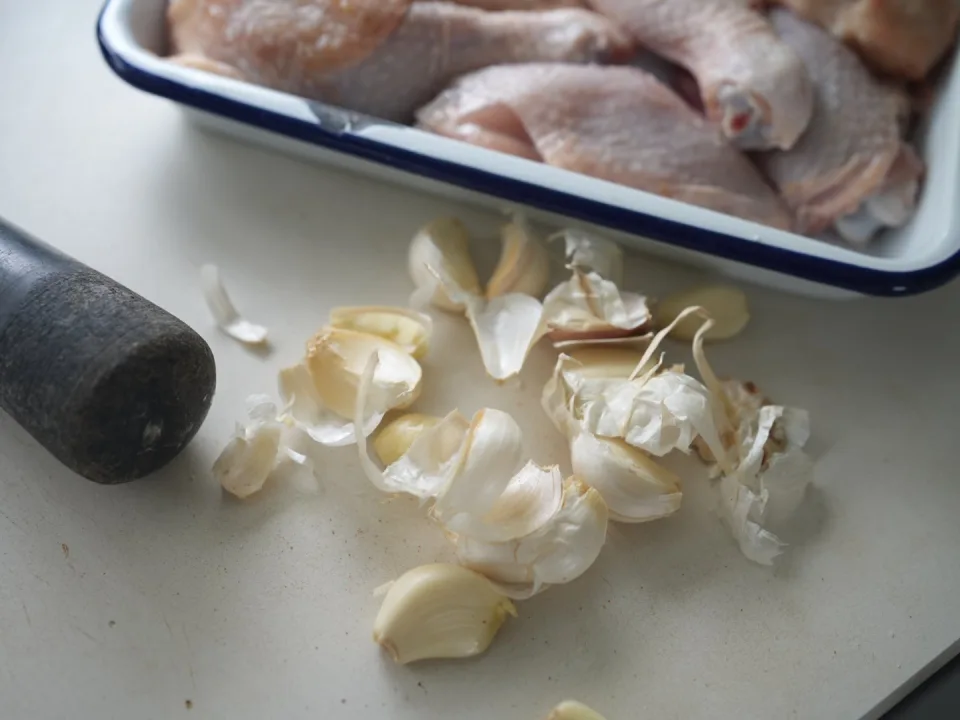
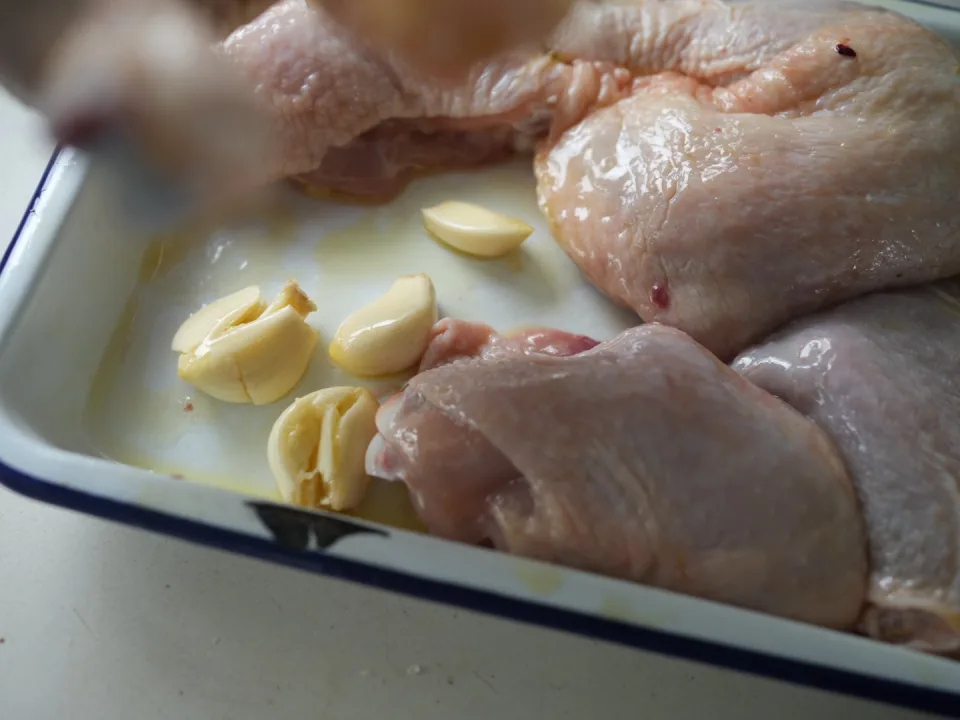
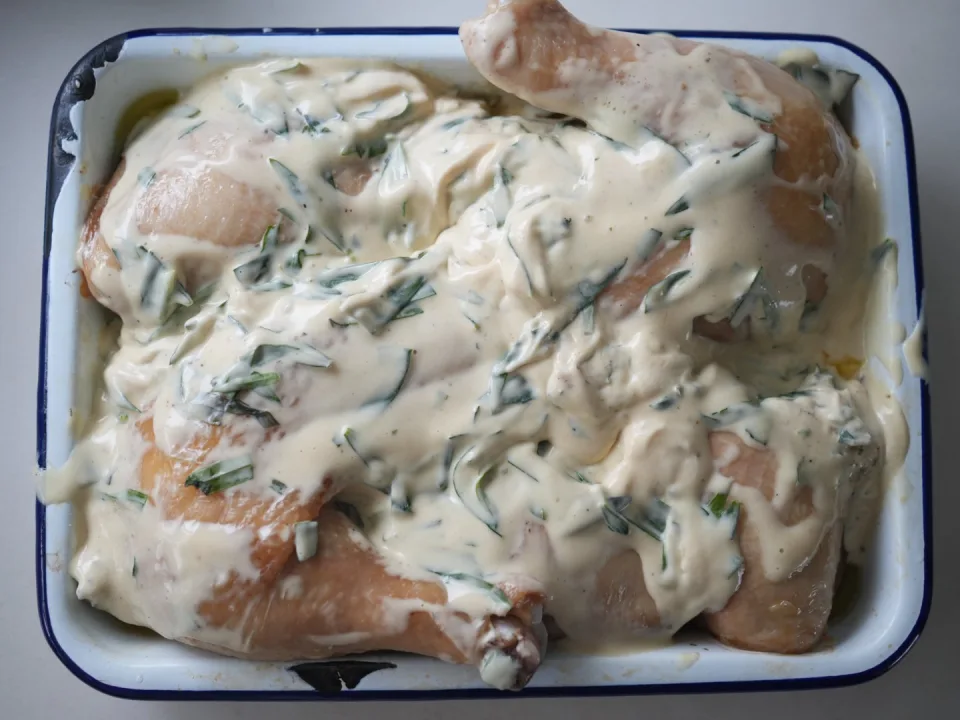
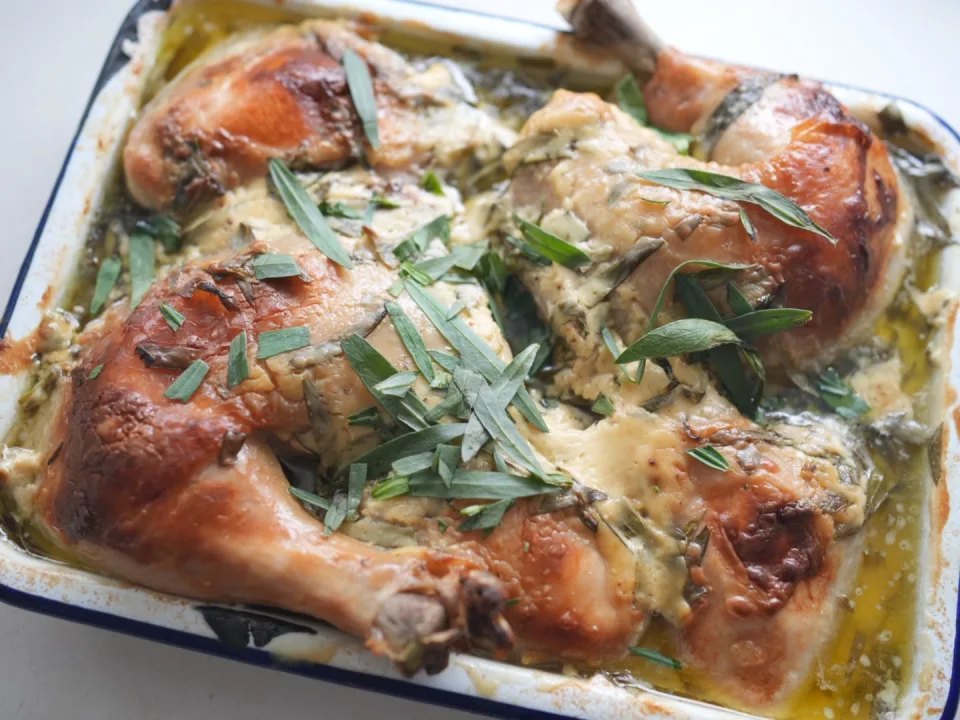
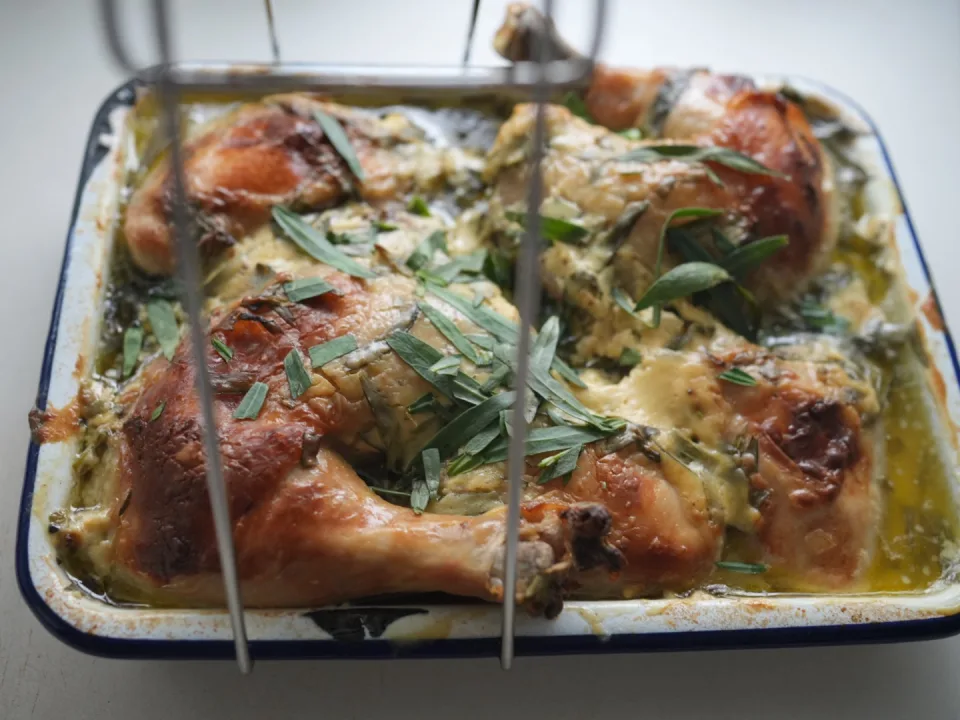
Language, Texture, and Small Discoveries
As always, cooking in English-language cookbooks brings small linguistic joys.
This recipe gave me phrases that felt just as satisfying as the food itself. “Work it into all the nooks and crannies.” “Bubbling stock.” “A proper dollop of mustard.” These expressions carry texture. They make instructions feel human, lived-in.
They also remind me that cooking language is cultural. It reflects not just technique, but attitude. Comfort with mess, with intuition, with imperfection.
Effort Versus Reward
There is no complex preparation. No long list of steps. And yet the final dish feels generous, almost celebratory. It is the kind of recipe you repeat not because it is impressive, but because it makes sense.
This was my third recipe for November’s #onebookthreerecipes, and it closed the month beautifully. A reminder that good cooking does not need to shout. Sometimes it just needs time, heat, and the right herb.
タラゴンローストチキン
英国の料理家ジュリアス・ロバーツの本から、タラゴンを使ったローストチキンに挑戦しました。
タラゴンは初めて使うハーブでしたが、マスタードとクリームに自然に溶け込み、驚くほどやさしく奥行きのあるソースに仕上がります。
秋の章に収められているのも納得で、オーブンから立ちのぼる香りや、ゆっくり焼き上がる時間そのものが、季節を味わう体験でした。
手間は最小限なのに、食卓に並ぶとしっかりごちそう感がある一皿。繰り返し作りたくなる理由が、静かに伝わってくるレシピです。
This post has a Video: Watch on Instagram✨(インスタに動画掲載しています)
A short Instagram video is available below, showing the overall flow and highlights of the recipe.
インスタで、動画を交えて全体の流れやポイントをご紹介しています。




Comments