MENU
  • Daily Blog
  • Cooking by Seasons / 季節別
    • ALL SEASON / 通年
    • SPRING / 春
    • SUMMER / 夏
    • AUTUMN / 秋
    • WINTER / 冬
    • Osechi /おせち
  • By type/テーマ別
    • Japanese cooking / 日本料理
    • Apéro / アペロ
      • Fruits / フルーツ
      • Salads, veggies / サラダ、お野菜メイン
    • Party food / パーティー料理
    • Soup, stew, hot pot / スープ、鍋等
    • Bread, savory bakes / パン、お食事ベイク
    • Savory Oven Cooking / オーブン料理
    • Desserts / デザート
    • Quick and Easy / 簡単レシピ
    • OTTOLENGHI オットレンギ
  • By ingredients / 材料別
    • Fish / お魚のおかず
    • Meat / お肉
    • Rice, grains /お米
    • Pasta, noodles/ パスタ、麺類
    • Veggies, salad / お野菜メイン
  • About me/ ごあいさつ
Seasons with yuuucoh✨
  • Daily Blog
  • Cooking by Seasons / 季節別
    • ALL SEASON / 通年
    • SPRING / 春
    • SUMMER / 夏
    • AUTUMN / 秋
    • WINTER / 冬
    • Osechi /おせち
  • By type/テーマ別
    • Japanese cooking / 日本料理
    • Apéro / アペロ
      • Fruits / フルーツ
      • Salads, veggies / サラダ、お野菜メイン
    • Party food / パーティー料理
    • Soup, stew, hot pot / スープ、鍋等
    • Bread, savory bakes / パン、お食事ベイク
    • Savory Oven Cooking / オーブン料理
    • Desserts / デザート
    • Quick and Easy / 簡単レシピ
    • OTTOLENGHI オットレンギ
  • By ingredients / 材料別
    • Fish / お魚のおかず
    • Meat / お肉
    • Rice, grains /お米
    • Pasta, noodles/ パスタ、麺類
    • Veggies, salad / お野菜メイン
  • About me/ ごあいさつ
Seasons with yuuucoh✨
  • Daily Blog
  • Cooking by Seasons / 季節別
    • ALL SEASON / 通年
    • SPRING / 春
    • SUMMER / 夏
    • AUTUMN / 秋
    • WINTER / 冬
    • Osechi /おせち
  • By type/テーマ別
    • Japanese cooking / 日本料理
    • Apéro / アペロ
      • Fruits / フルーツ
      • Salads, veggies / サラダ、お野菜メイン
    • Party food / パーティー料理
    • Soup, stew, hot pot / スープ、鍋等
    • Bread, savory bakes / パン、お食事ベイク
    • Savory Oven Cooking / オーブン料理
    • Desserts / デザート
    • Quick and Easy / 簡単レシピ
    • OTTOLENGHI オットレンギ
  • By ingredients / 材料別
    • Fish / お魚のおかず
    • Meat / お肉
    • Rice, grains /お米
    • Pasta, noodles/ パスタ、麺類
    • Veggies, salad / お野菜メイン
  • About me/ ごあいさつ
  1. Home
  2. Japanese cooking / 日本料理
  3. /Osechi cooking: Kobumaki with salmon & apricots, Stuffed Wishes for the New Year / 杏子とサーモンの昆布巻き

/Osechi cooking: Kobumaki with salmon & apricots, Stuffed Wishes for the New Year / 杏子とサーモンの昆布巻き

2025 12/29
Japanese cooking / 日本料理 Osechi /おせち WINTER / 冬
2025-12-292025-12-30
  • Copied the URL !

Osechi cooking: Kobumaki with salmon & apricots, Stuffed Wishes for the New Year / 杏子とサーモンの昆布巻き
kobumaki apricot salmon
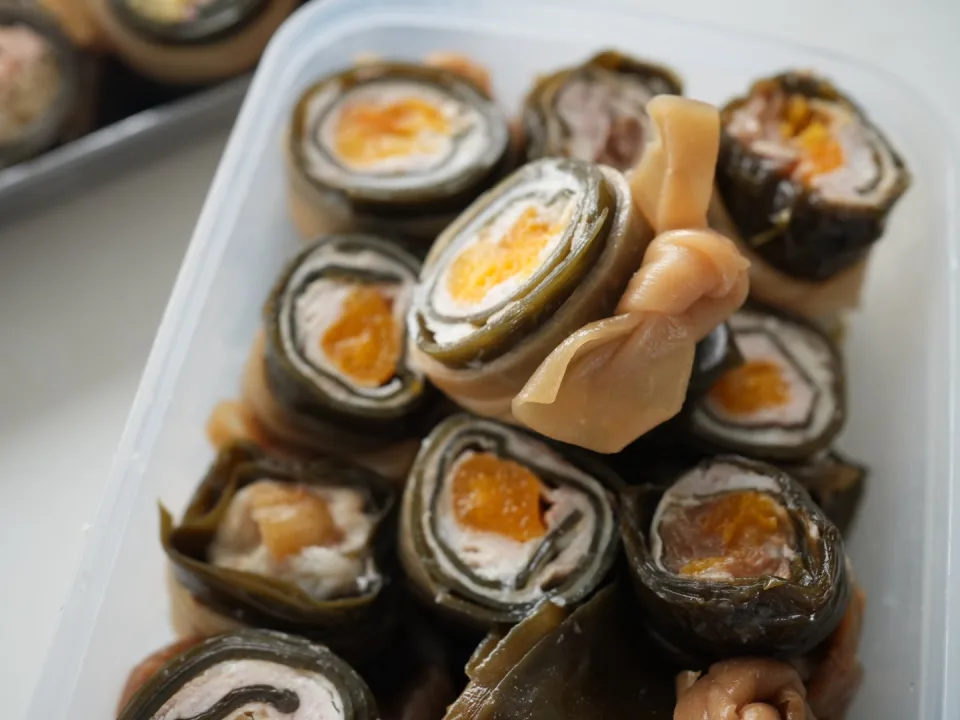
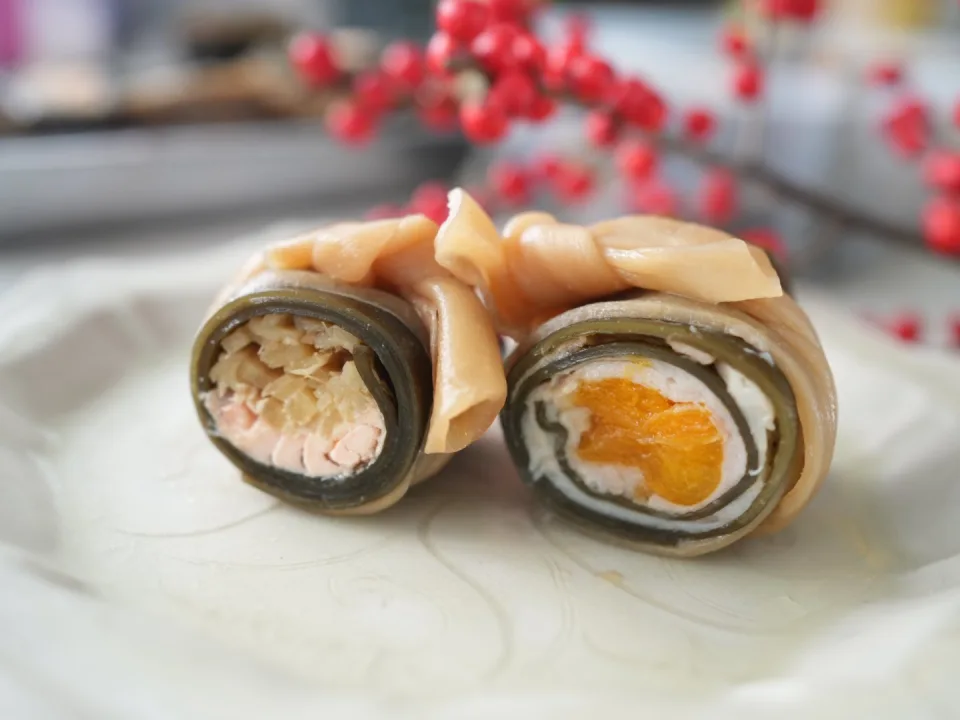
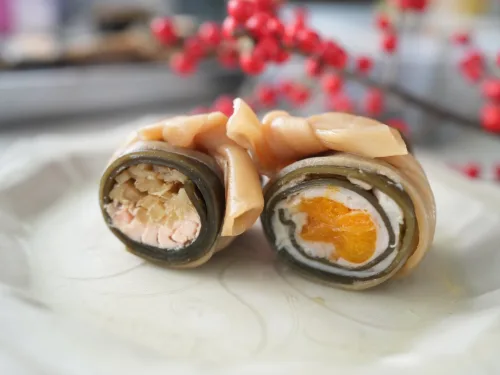
Kobumaki of two variations, ginger salmon & apricots / 生姜サーモン&杏子の昆布巻き
Contents / 目次

What Osechi Really Is

Osechi, or osechi-ryori, is often described simply as a Japanese New Year’s bento. While that description is technically correct, it barely scratches the surface.

Historically, osechi dates back to seasonal ceremonial foods prepared for important turning points of the year. Over time, it became closely associated with the New Year, a moment of renewal, rest, and hope. Traditionally, the dishes were prepared at the end of the year so that cooking could be minimized during the first days of January. This allowed those who usually cooked, often women of the household, to rest and begin the year with ease.

Osechi is eaten slowly over several days, shared with family, revisited again and again. It is not a single meal but a rhythm. Each box, each layer, carries intention.
あわせて読みたい
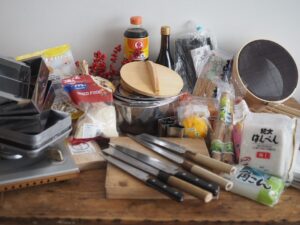
Osechi cooking 2022 Chapter 1, Preparation of goods / 2022年末おせちづくり その1.お道具などの… Skipping Christmas… I decided to make a small osechi for this Friday, as I will be on a trip next week.😇❤️‍🔥❤&#xf…
あわせて読みたい
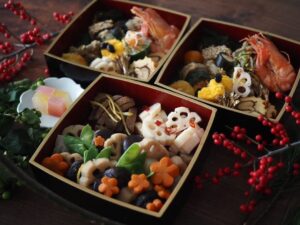
Osechi cooking 2023 ③ Boxed in Juubako / おせち作り、重箱詰めと銘々詰めと What is “Osechi”? Welcome to my documentation of Osechi (traditional Japanese new year meal)🍱 These boxed meal are prepared for January 1st – to be e…

From Formal Tradition to Everyday Choice

In contemporary Japan, osechi has changed. Store-bought osechi, once reserved for formal households, is now widely enjoyed. Department stores, supermarkets, and even convenience stores offer beautifully prepared boxes. For many families, this has made osechi more accessible, more casual, and less intimidating.

And yet, making osechi at home still makes a difference.

Not because it is more authentic, or more correct, but because of what the process teaches. Preparing osechi is an accumulation of small, fundamental cooking lessons: seasoning gently, adjusting as you go, understanding how ingredients behave over time, learning patience.

In that sense, osechi may be the ultimate home-cooked meal. It is not about speed or perfection. It is about care, repetition, and intention.
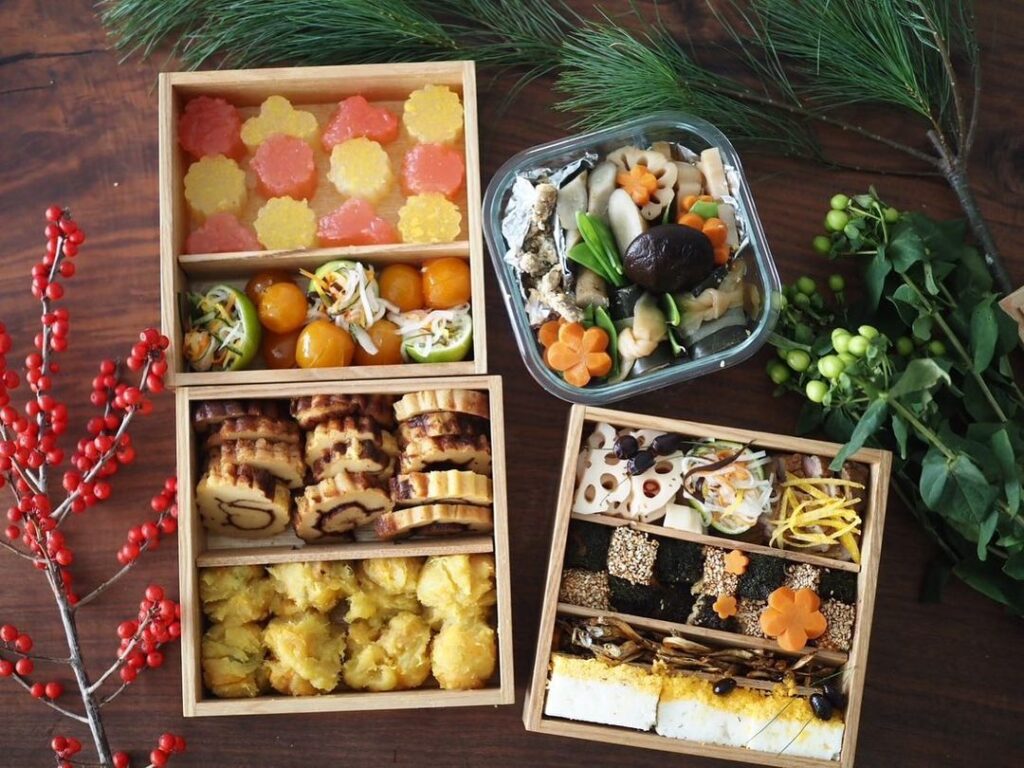
osechi recipe cooking singapore / 手作りおせち シンガポール 教室
What it looks like when complete / シンガポールで作ったお節

Kobumaki as a Vessel of Meaning

Among the many dishes found in osechi, kobumaki holds a special place.

Kobumaki, kombu rolls, are traditionally stuffed with dried herring and gently simmered. Kombu itself is rich with symbolism. The word “kobu” echoes “yorokobu,” meaning to rejoice. Its widening shape is said to represent happiness spreading outward. It is a dish that quietly carries joy.

Making kobumaki is an exercise in restraint. Ingredients are wrapped rather than exposed. Flavors are encouraged to mingle slowly. The act of tying with kampyo is both practical and symbolic, binding the contents and the wish together.
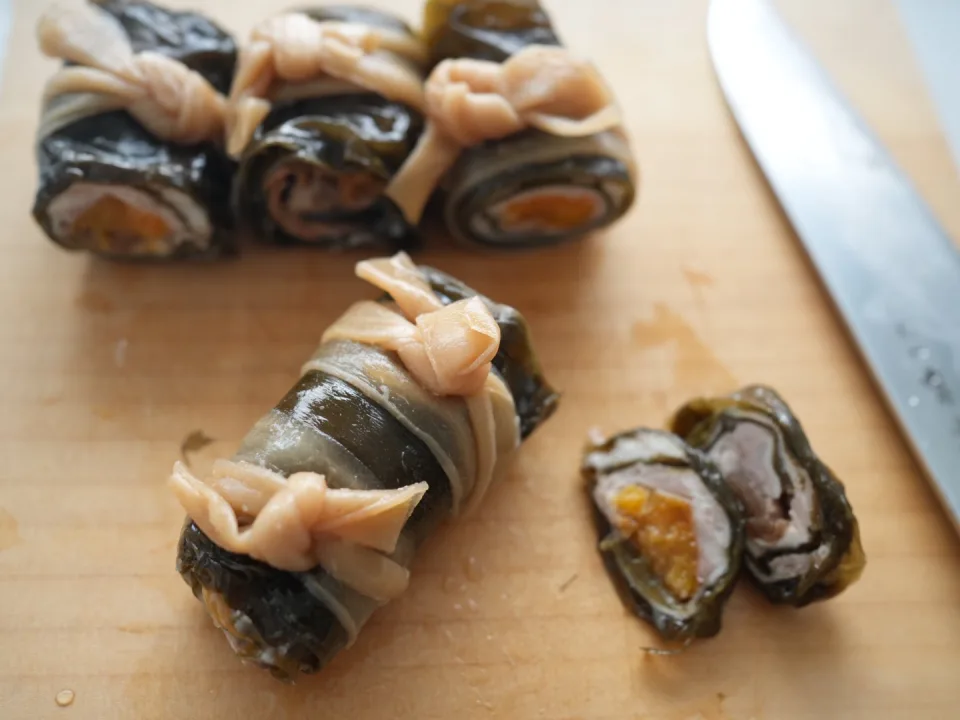
kobumaki apricot salmon
Kobumaki / 昆布巻きの端っこつまみ食いは作り手の特権

Adapting Tradition Abroad

Living abroad inevitably changes how traditions appear in the kitchen.

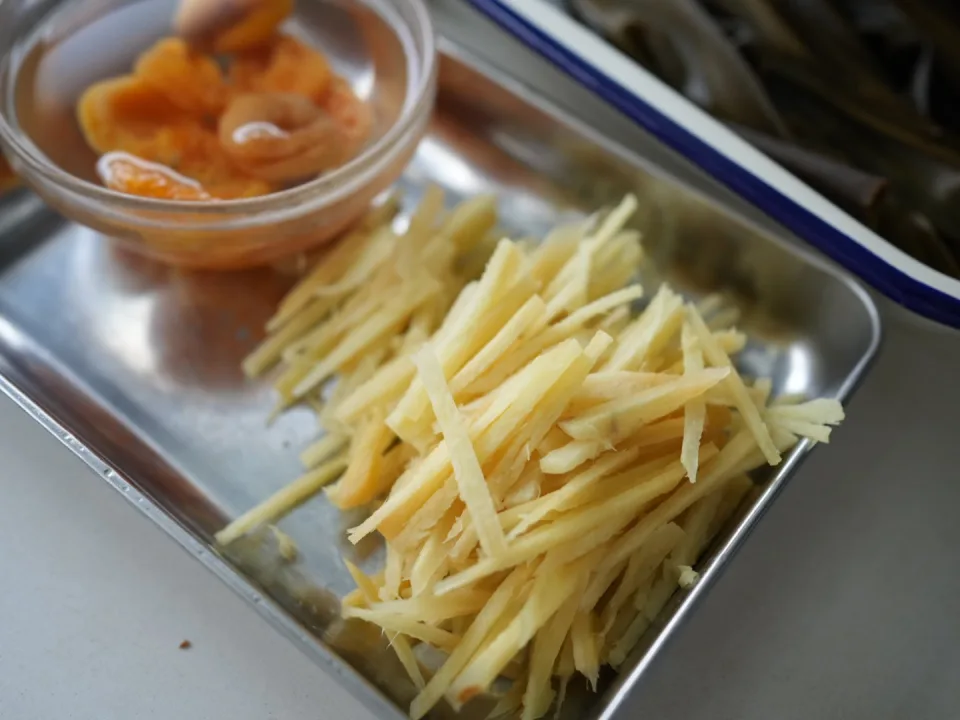
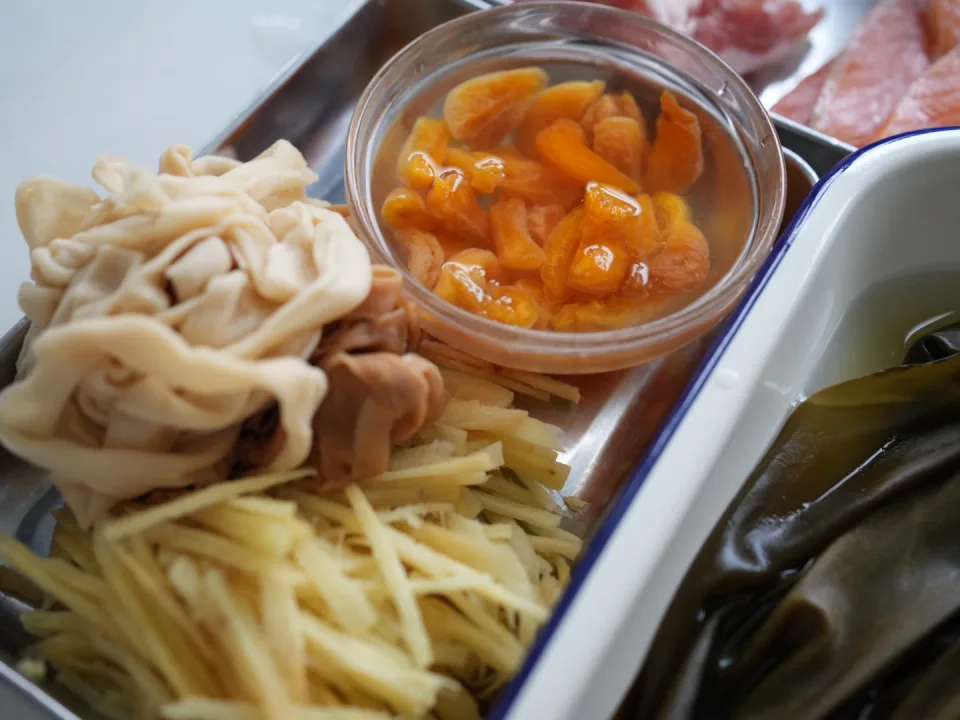
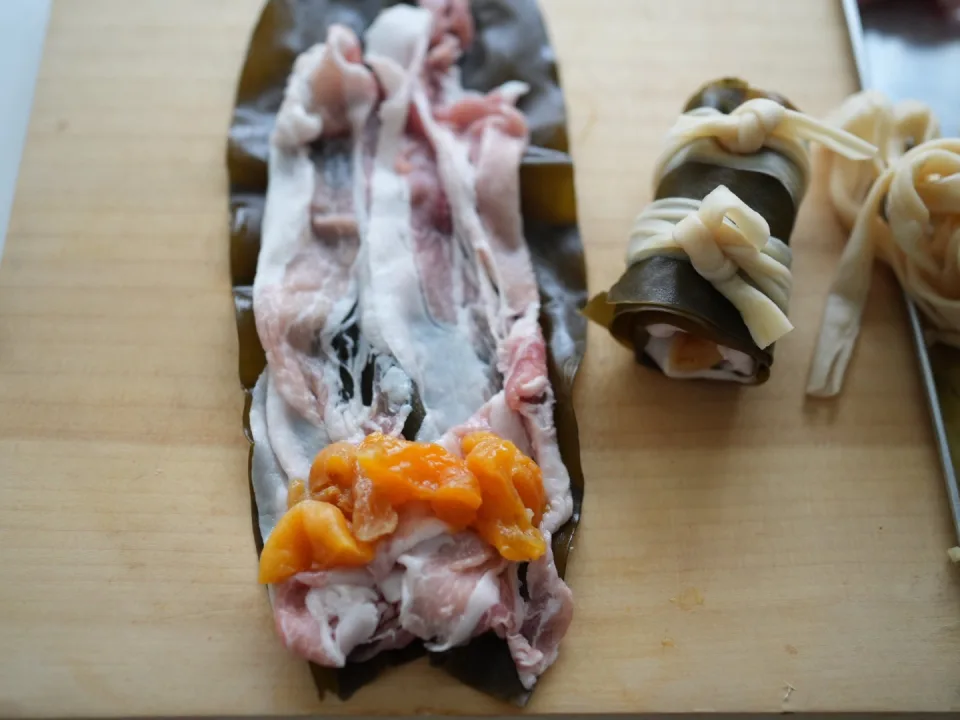
Dried herring is not always available, and so adaptation becomes not a compromise, but a continuation. This year, I returned to a familiar version, stuffing kombu with salmon and shredded ginger. The result is tender, rich, and deeply comforting.

Alongside it, I tried something new: thin shabu-shabu pork slices paired with dried apricot. It is not particularly traditional, but it felt aligned with the spirit of osechi. The gentle sweetness and slight bitterness of apricot balanced beautifully with the pork’s depth. A new discovery, and one I will remember.

What matters is not strict replication, but intention. The care taken in rolling, tying, simmering, and adjusting.
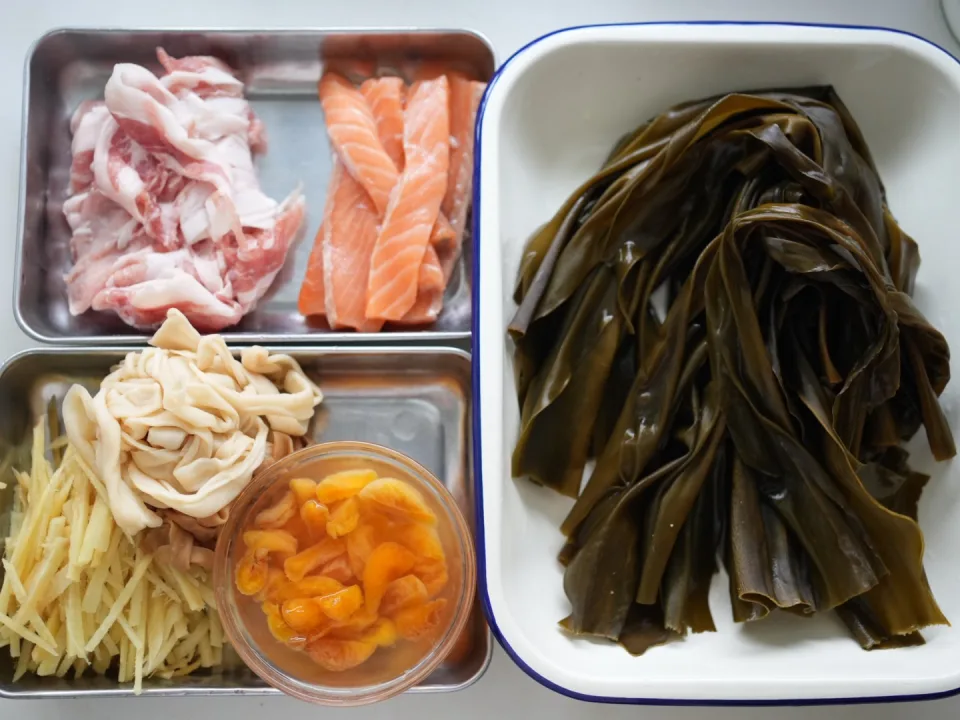
kobumaki apricot salmon
Ingredients for Kobumaki in my Singapore kitchen / シンガポールで作る昆布巻き

Chapter 5. The Quiet Technique Behind the Dish

Making kobumaki involves techniques that feel almost invisible when done well.

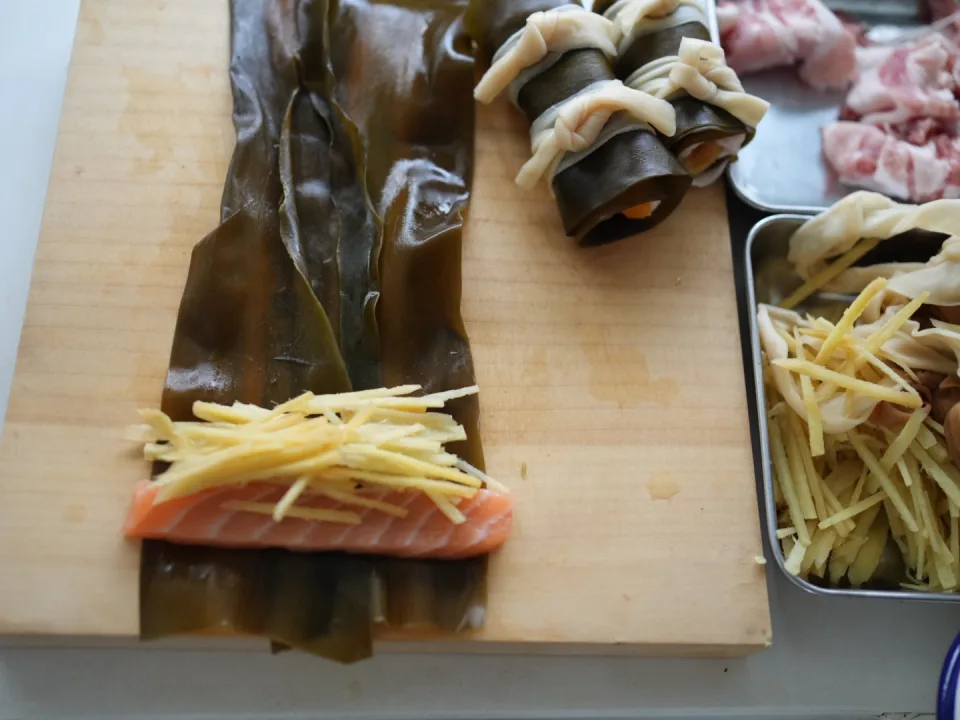
Quick-cooking kombu is soaked until pliable. Kampyo is massaged with salt and briefly boiled to soften. Ingredients are rolled tightly, tied securely, and arranged knot-side down in the pot.

The simmering is gentle. The seasoning is adjusted gradually. Pork and fish are cooked separately, respecting their differences. The goal is not intensity, but balance. By the end, everything is glossy, tender, and unified.

It is slow food in the truest sense, but never heavy.

Cooking as an Act of Enclosure

There is something deeply symbolic about stuffing and wrapping food at the end of the year.

It is not just about filling an ingredient. It is about enclosing wishes. Folding intentions inward. Allowing time and heat to do their work quietly.

As I cooked, I found myself thinking about a line from a film I once watched, where a performance made someone feel like the New Year had arrived. Sharp, clear, and full of promise. That feeling, slightly awkward to explain but instantly recognizable, surfaced again in the kitchen.

Perhaps that is what osechi does best. It creates a sense that something good might happen.

Why Handmade Still Matters

Tasting kobumaki while it is still warm is a privilege reserved for the maker. It is a small reward, but a meaningful one.

Store-bought osechi has its place. It allows more people to participate in the tradition, and that is a good thing. But making even one or two dishes at home anchors the season differently. It turns the New Year from a date into a process.

In that sense, osechi is not about abundance or display. It is about continuity. A quiet craft passed from hand to hand, year after year.

Quick flow in photo
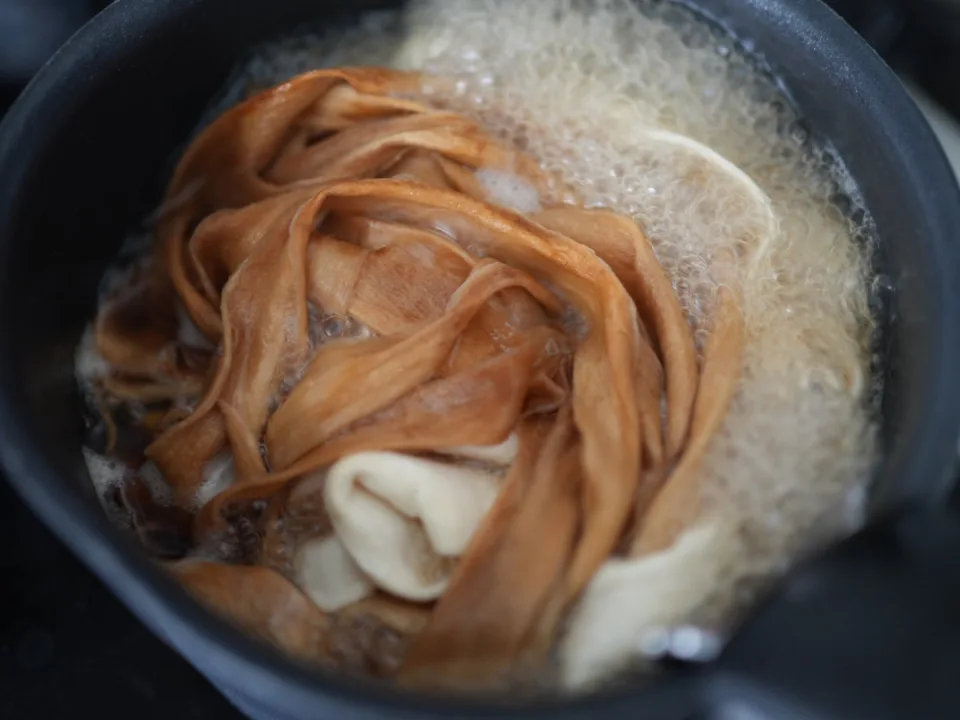
kobumaki apricot salmon

This post has a Video: Watch on Instagram✨(インスタに動画掲載しています)

A short Instagram video is available below, showing the overall flow and highlights of the recipe.
インスタで、動画を交えて全体の流れやポイントをご紹介しています。

この投稿をInstagramで見る

Yuko(@yuuucoh)がシェアした投稿

シンガポールで作るお節:杏子とサーモンの昆布巻き

おせちは、日本のお正月に欠かせない家庭料理でありながら、時代とともに形を変えてきました。
いまでは市販のおせちも身近になり、気軽に楽しめる存在ですが、やはり手作りには特別な意味があります。
昆布巻きのように、食材を包み、結び、ゆっくり煮含める工程には、調味の基本や素材への向き合い方が詰まっています。
少量でも自分の手で用意すると、お正月の時間が少しだけ深く、静かに整う気がします。作り手だけが味わえる出来立ての一口も、そのご褒美のひとつです。
Japanese cooking / 日本料理 Osechi /おせち WINTER / 冬
kobumaki apricot salmon

If you like this article, please
Follow !

Follow Me
Let's share this post !
  • Copied the URL !
  • Copied the URL !
  • The Perfect Holiday Drink Upgrade - Festive Ice cubes with Citrus, Herb, and Spice / きらきらホリデー気分アイス

Author of this article

yuuucohのアバター yuuucoh IG: Yuuucoh

関連記事

  • Winter Festive Citrus, Herb, and Spice Ice Cubes
    The Perfect Holiday Drink Upgrade – Festive Ice cubes with Citrus, Herb, and Spice / きらきらホリデー気分アイス
    2025-12-06
  • Toraya Wagashi
    Wagashi Collection, the Art of Shibukawa-ni (Japanese Candied Chestnuts) / 渋皮煮と和菓子とエトセトラ
    2025-09-29
  • Mottainai Tarako tofu
    The Mottainai Spirit of Nokorimono: How Leftovers Travel from Plate to Plate / 残り物から、もう一膳
    2025-09-27
  • maze gohan Chrysanthemum
    Autumn Maze Gohan: Mixed Rice with Chrysanthemum & Chirimen Anchovy / 混ぜご飯2種:残り物には福がある
    2025-09-26
  • Myoga Sushi
    Edible Autumn: Vegan Trio of Inari Sushi, Myoga Sushi and Chrysanthemum petal pickles / 稲荷・茗荷寿司・菊なます
    2025-09-25
  • Homemade Kuri Gohan (Chestnut rice)
    Recipe: Homemade Kuri Gohan with with Gomashio – The Art of Chestnut Rice in Japanese Cuisine / 手作り栗ご飯
    2025-09-16
  • Una-tama don Unagi and tamagoyaki
    Supreme Una- Tama Don (Grilled Eel & Tamagoyaki rice bowl) and Grilled Sanma/ うな玉丼を作るの巻き
    2025-09-12
  • Sanma gohan & Myoga Soup
    Sanma Gohan and Myoga Soup – A Taste of Early Autumn and Culinary Calm 秋のはじまり、サンマとみょうがで季節のごはん
    2025-09-09

Comments

To comment Cancel reply

Yuko
IG: yuucoh
Curious of flavors, finding beauty in cooking. Currently in Singapore. Certified in traditional Japanese culinary.
在シンガポール、たまに和食を再現。お料理って楽しい! 近茶流懐石講師
My recent activities
Browse by Categories
Popular articles
  • OTTOLENGHI recipe at home:  Vegan Mushroom & Kimchi Mapo Tofu
    OTTOLENGHI recipe at home:  Vegan Mapo Tofu with mushroom & kimchi / オットレンギ: きのことキムチのヴィーガン麻婆豆腐
  • ottolenghi polenta and green harissa
    OTTOLENGHI recipe at home: Baked polenta with Courgette and Green Harissa
  • "Marry Me Chicken" with Sundried Tomatoes
    Ultimate Recipe of “Marry Me Chicken” with Sundried Tomatoes – Romance in a Skillet / “マリーミーチキン”トマトとチキンの恋する煮込み
  • OTTOLENGHI ‘Silky courgette and salmon salad’ - COMFORT
    OTTOLENGHI recipe: ‘Silky courgette and salmon salad’ – COMFORT/ オットレンギ COMFORT レシピ
  • ‘Persto pasta with charred beans and potatoes’ - OTTOLENGHI COMFORT
    Ottolenghi Recipe: ‘Pesto pasta with charred beans and potatoes’, Comfort/ オットレンギのレシピで描く、ペストポテサラ
By your interests / タグ別
agar apero asparagus desserts France fried Hanoi Japanese cooking Japanese recipe Jelly main dish meal idea osaka ottolenghi Paris rachel roddy salad side dishes sushi tofu travel Vietnam Washoku おもてなし おもてなし料理 ちらし寿司 アペロ オットレンギ サラダ ゼリー デザート ハノイ パリ フランス ベトナム 前菜 大阪 寿司 揚げ物 旅行 日本料理 盛り付け 簡単レシピ 豆腐 近茶流

© Seasons with yuuucoh✨.

Contents / 目次